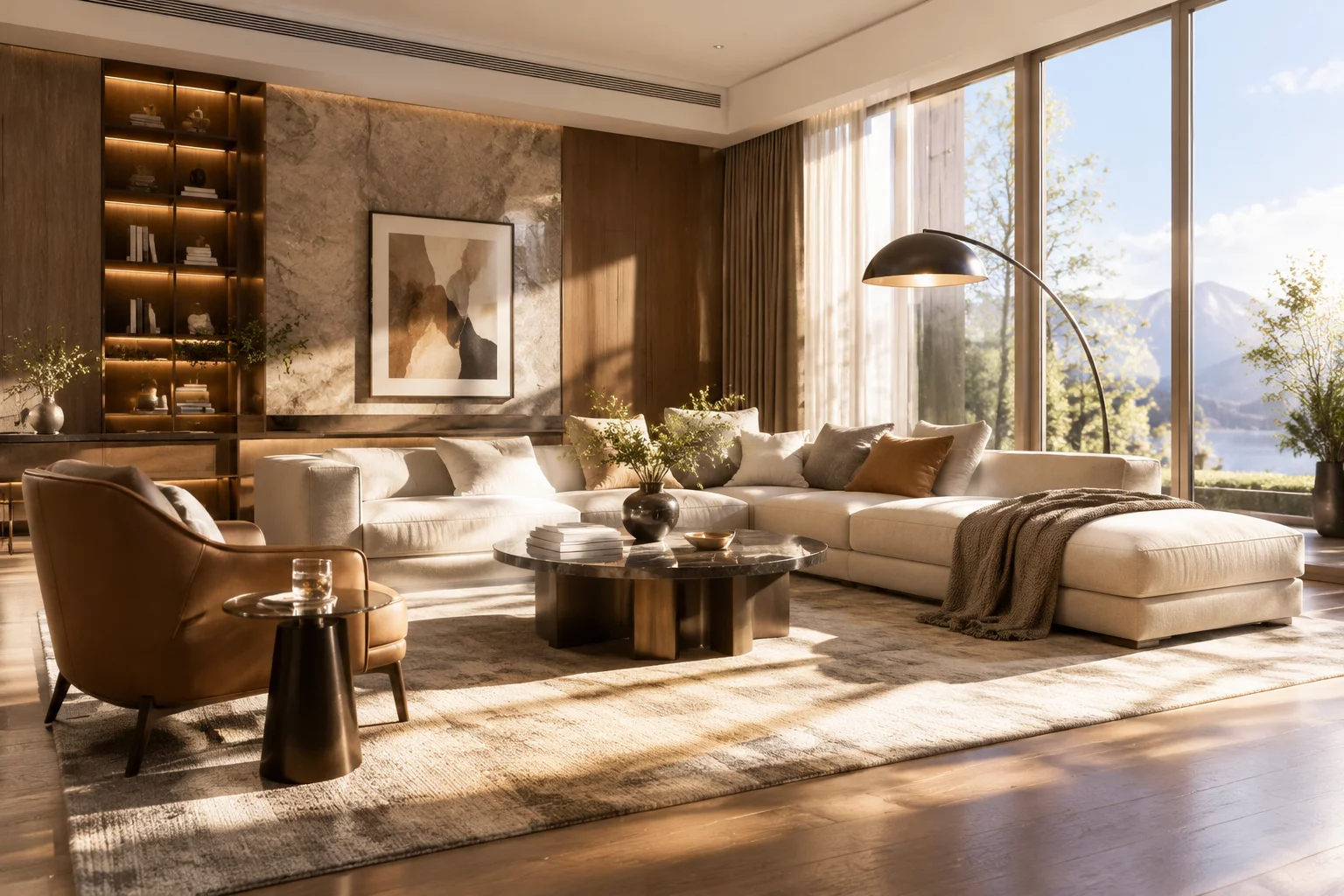
Overview & Workflow Architecture
AI Render V2 introduces an optimized neural ray-distribution architecture developed specifically for residential interiors and complex spatial plans. The engine evaluates surface normals, material reflectance coefficients, and dynamic aperture lighting directly from your 3D layout. Instead of relying on lengthy offline bake passes, designers can view photorealistic global illumination, natural caustic reflections, and rich depth of field within seconds directly in the active viewport.
Key Architectural Principle
Predictive neural irradiance synthesis combines physical photon calculation with micro-surface texture estimation, delivering noise-free 4K previews without sacrificing millimeter modeling accuracy.
Detailed Step-by-Step Implementation
Working inside residential and commercial projects demands rapid visual confirmation during design reviews. In AI Render V2, surface materials automatically inherit physical attributes like micro-roughness, specular dispersion, and sub-surface scattering for organic elements. Lighting instruments simulate exact Kelvin temperature ranges, allowing natural transitions from crisp morning sunlight to warm evening accent illumination.
The updated neural denoiser suppresses multi-bounce noise without blurring subtle edge definitions or fine fabric weaves. Designers can manipulate wall placements, reposition furniture modules, and swap timber finishes while observing instantaneous lighting adaptations across all connected rooms.
Core Guidelines
- Real-time bidirectional path tracing powered by neural acceleration.
- Dynamic environmental lighting presets for dawn, midday, overcast, and twilight atmospheres.
- Adaptive material tessellation with automated physical texture scaling.
- Direct multi-format render export supporting 8K ultra-wide panoramic walkthroughs.
AI Render V2 creates seamless synchronization between schematic drafting and photorealistic presentations. Architectural modelers can demonstrate living spaces in rich detail directly during client discussions.
Optimal performance requires a hardware ray-tracing GPU with at least 8GB dedicated VRAM, 16GB RAM, and compatibility with modern 64-bit operating systems across desktop configurations.
Local processing handles viewport previews completely on-device without internet latency, while cloud clustering handles batch ultra-resolution 8K client brochures.
Open your project file, navigate to the Render settings panel, and choose AI Render V2. The system automatically converts legacy textures to physically based neural shaders without altering room measurements.
An 8-core modern processor paired with a ray-tracing capable discrete graphics card and 16GB system memory provides fluid 60 FPS real-time viewport feedback.
Community Discussion
Share insights with architectural modelersNo comments yet. Be the first to leave a comment or question about this feature.
Leave a Comment or Question